
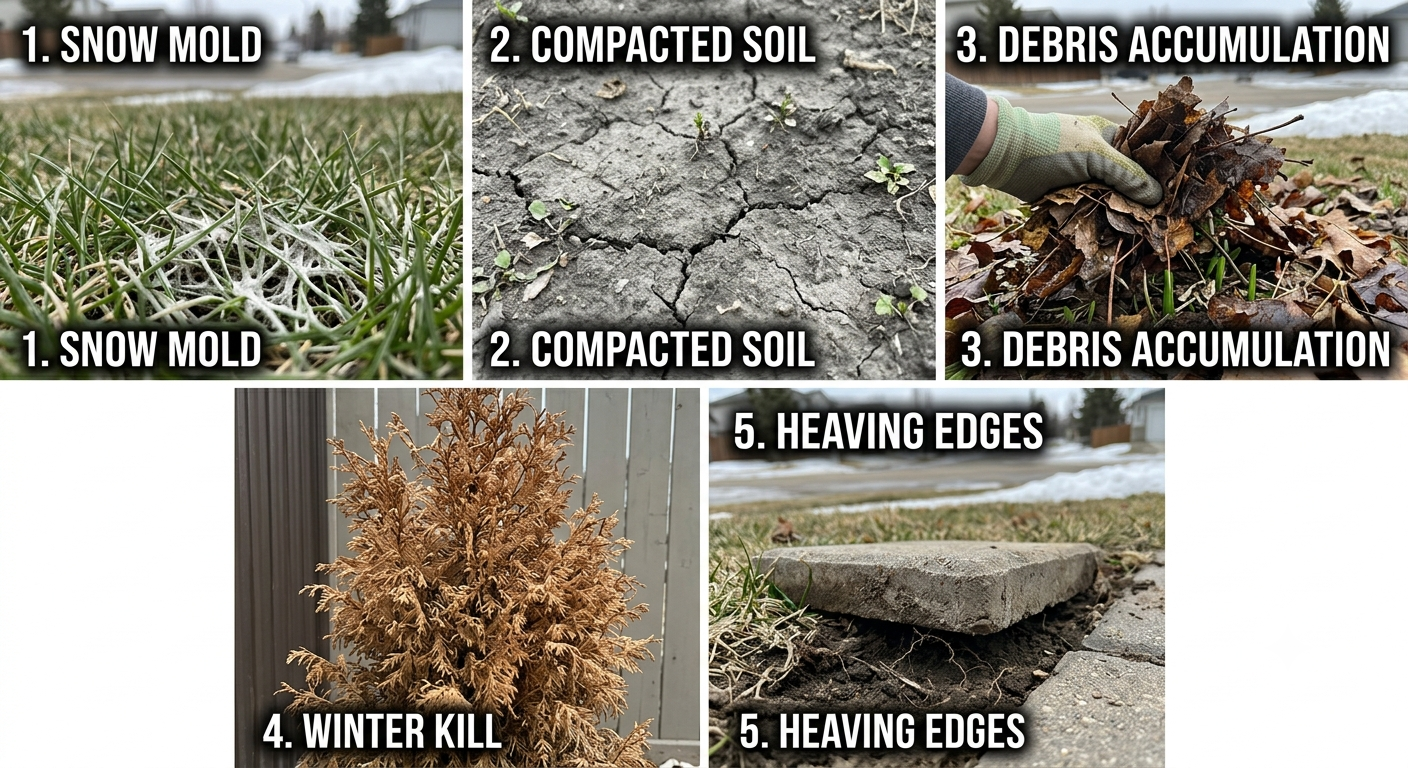
Every April, Edmonton yards come out of hiding, and what’s underneath the melting snow isn’t always pretty. Matted leaves, broken branches, patches of grey fuzz where grass used to be it’s the kind of mess that makes a lot of homeowners wonder if a quick rake-around will fix it, or if the yard is trying to tell them something bigger.
After a long Prairie winter, most yards need more than a light tidy-up. Here are five signs your lawn and garden are past the point of a weekend DIY job and ready for a proper professional spring cleanup.
1. Grey or White Patches Where the Grass Used to Be
If you pull back last fall’s leaves and find fuzzy, grey-white patches matted into the grass, that’s snow mold, and it’s one of the most common things Edmonton lawns deal with coming out of winter. It shows up when snow sits on top of leaves and debris for months, trapping moisture underneath and creating the perfect environment for fungus to take hold.
The frustrating part is that snow mold often looks worse than it actually is, but leaving it untreated lets it spread and smother healthy grass trying to green up underneath. One of our crews came across a Millwoods yard last spring where nearly a third of the lawn was matted down under old leaves that had never been cleared the previous fall. Once the debris came off and the lawn could breathe again, the grass bounced back within weeks. Left alone, that same patch would likely have needed reseeding.
2. The Lawn Feels Spongy or Squishy Underfoot
Walk across your lawn in early spring, and if it feels soft and springy rather than firm, you’re likely dealing with a thatch buildup a layer of dead grass, roots, and organic matter sitting between the soil and the green blades above. A thin layer is normal and even helpful, but once it gets thick, it blocks water, air, and nutrients from reaching the roots.
Combined with Edmonton’s freeze-thaw cycles, thatch tends to build up faster here than in milder climates, since the repeated freezing and thawing traps organic material at the surface instead of letting it break down naturally. If your lawn has felt spongy for more than one season, or you’re noticing thinning grass despite regular watering, that’s usually the clearest sign this needs professional dethatching rather than a quick rake-through.
3. Water is Pooling Instead of Draining
Take a look at your yard a day or two after the snow finishes melting. If you’re seeing puddles sitting in the same low spots, or the ground squelches underfoot well after everything else has dried out, your yard has a drainage problem that winter has only made worse.
Compacted soil, matted debris, and thatch buildup all contribute to poor drainage, and standing water creates the exact damp, low-oxygen conditions that root rot and fungal disease thrive in. This is one of those issues that’s easy to miss because it looks like a minor puddle, but it’s usually a sign the soil underneath needs aeration and cleanup before the growing season really kicks in.
4. Weeds Are Already Ahead of the Grass
If dandelions and chickweed are popping up before your actual lawn has even greened up properly, that’s not a coincidence. Weeds are opportunistic they take advantage of bare patches, thin turf, and compacted soil left over from winter, and they’ll establish themselves fastest in exactly the spots where your lawn is weakest.
Seeing an early flush of weeds is often less about the weeds themselves and more a signal that the lawn underneath needs some attention. A yard that’s dense, healthy, and properly cleaned up going into spring gives weeds far less room to take hold in the first place.
5. Broken Branches, Storm Debris, and Winter Damage Everywhere You Look
Edmonton winters aren’t gentle on trees and shrubs. Heavy snow loads, ice buildup, and the odd late-season windstorm leave behind broken branches, split limbs, and shrubs that didn’t make it through the cold. If your yard looks like it took a beating dead branches tangled in hedges, twigs scattered across garden beds, perennials that are clearly not coming back that’s more than a weekend of yard work.
Left in place, this kind of debris does double damage: it shelters pests, smothers whatever is trying to grow underneath, and makes the whole property look neglected right when things should be waking up for the season. Pruning damaged branches properly, rather than just breaking them off, also matters for how well your trees and shrubs heal and grow back through the summer.
A Quick Test You Can Do Right Now
Before you decide whether your yard needs a full professional cleanup or just a light tidy-up, try this: press your heel firmly into the lawn and lift your foot. If the grass springs back within a second or two, it’s still healthy and just needs a light touch. If it stays flattened, or the ground feels wet and heavy underneath, that’s a sign the lawn is under more stress than it looks and would benefit from a proper assessment before you start working on it yourself.
Don’t Jump the Gun on Timing
As eager as everyone is to get outside after an Edmonton winter, working on a yard too early can undo any progress before it starts. If the soil is still soggy from snowmelt, walking on it or running equipment over it compacts the ground further, which works against everything a spring cleanup is meant to fix. The safer window is once the soil has firmed up and stopped squelching underfoot, usually in the second half of April in most Edmonton neighbourhoods, though it can shift a couple of weeks earlier or later depending on how the winter played out.
When a Rake Isn’t Enough
A little bit of debris after winter is normal every yard in Edmonton gets some. But when you’re seeing several of these signs at once matted patches, spongy ground, standing water, early weeds, and storm damage that combination usually means your yard needs more than an afternoon with a rake and a pair of pruning shears. It needs a proper reset before the growing season takes over and makes every one of these problems harder to fix.
Quick Questions Homeowners Ask
Is snow mold actually harmful, or does it go away on its own?
Light cases often fade once the lawn dries out and sunlight reaches it, but heavier patches can smother grass underneath if the matted leaves and debris aren’t cleared away, so it’s worth checking rather than assuming it’ll sort itself out.
Can I just power rake the lawn myself instead of dethatching professionally?
You can, but power raking is easy to overdo, and tearing into the grass crowns while the lawn is still stressed from winter often causes more damage than the thatch itself was doing.
How do I know if it’s a drainage problem or just normal spring melt?
Normal melt clears within a few days. If the same spot is still pooling water or squelching a week or more after everything else has dried out, that’s a drainage issue worth having looked at.
Not sure if your yard needs a full cleanup or just a bit of touch-up work?
Season Edge has been helping Edmonton homeowners bring their yards back to life every spring, from clearing winter debris to dethatching, aeration, and getting garden beds ready for the season ahead. Reach out to our team for a quick assessment — we’ll tell you exactly what your yard needs to come back stronger this year.