
Every fall, the same thing happens. The leaves come down, the weekends get busy, and that pile of leaves sitting on the grass doesn’t seem like a big deal you’ll get to it eventually. But by the time spring rolls around and the snow melts, that “eventually” has already done its damage.
Snow mold is one of the most common and most preventable lawn problems Canadian homeowners deal with every spring. And more often than not, a thick layer of unraked leaves is what starts the whole thing.
Here’s what’s actually happening under that snow, and what you can do before winter sets in.
What Is Snow Mold, Exactly?
Snow mold is a fungal disease that develops in cold, wet conditions specifically during the period when snow is sitting on unfrozen or partially frozen ground. It doesn’t need warmth to grow. In fact, it thrives between 0°C and 7°C, which is exactly the temperature range you get under a snowpack.
There are two main types that show up in Canadian lawns:
- Pink snow mold (Microdochium nivale) can develop with or without snow cover and tends to be more damaging because it attacks the crown of the grass plant.
- Grey snow mold (Typhula blight) needs snow cover to develop but can spread quickly across a lawn once it takes hold.
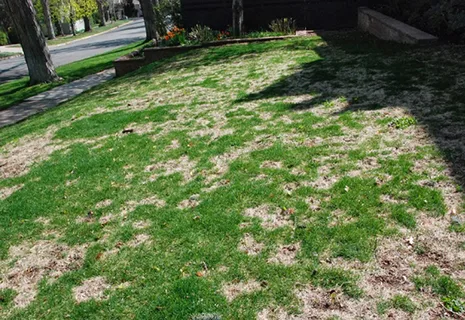
Both leave behind patches of matted, straw-coloured grass in spring some of which may recover on their own, and some of which won’t.
The Connection Between Fallen Leaves and Snow Mold
This is where most people don’t connect the dots.
When leaves pile up on your lawn and stay there through the winter, they create what fungal spores love most: a dark, damp, oxygen-deprived environment pressed right up against your grass. The leaves trap moisture, block air circulation, and mat down the grass blades essentially building a perfect incubator for mold to develop at its own pace, undisturbed, for months.
By the time snow falls, the mold already has everything it needs. The snow just adds an insulating layer that keeps conditions consistent and gives the fungus even more time to spread.
Think of it this way: your lawn doesn’t go fully dormant the moment temperatures drop. There’s a window in late fall where the grass is still technically active but slowing down and that’s exactly when it’s most vulnerable. A heavy leaf cover during that window is all it takes.
What You’ll See in the Spring
As the snow pulls back, the damage usually becomes obvious within a week or two. You’ll notice:
- Circular or irregular patches of bleached, matted grass
- A web-like coating on the grass surface (especially with grey mold)
- Pinkish or greyish discolouration depending on the mold type
- Patches that mirror exactly where leaves were sitting the heaviest
Mild cases often recover on their own as the lawn dries out and starts growing again. But heavier infections — especially pink snow mold that kills the crown may require overseeding and some extra care to fill back in properly.
How to Prevent Snow Mold Before Winter
The good news is that snow mold is largely preventable with a bit of attention in the fall. You don’t need chemicals or special treatments — just a few straightforward habits.
Rake or Mulch Leaves Before the Ground Freezes
The single most effective thing you can do is clear leaves off the lawn before the first snowfall sticks. You don’t have to rake every leaf the moment it drops but do a thorough cleanup in late fall, ideally before the ground freezes solid.
If you’d rather not bag everything, a mulching mower is a great option. When leaves are dry and light, running the mower over them breaks them into fine pieces that settle between the grass blades and actually add organic matter back to the soil. The key is not letting them pile up thick enough to smother the grass.
Give Your Lawn a Final Cut at the Right Height
Going into winter with grass that’s too long is a problem. Long grass blades flop over under snow weight and create that same matted, airless environment that mold needs. Aim to cut your lawn down to around 5–6 cm (about 2 inches) for the last mow of the season.
Don’t scalp it cutting too short going into winter creates its own stress. A moderate final height is the goal.
Aerate in the Fall if You Haven’t Already
Compacted soil and thatch buildup make it harder for water to drain properly — which means more moisture sitting near the surface, exactly where mold can take hold. Fall aeration helps break up compaction and improves drainage before winter arrives.
Avoid Piling Snow Over Problem Areas
If you shovel or snow blow your driveway and walkways, try not to pile the excess snow in the same spots on your lawn every year. Deep, long-lasting snow packs in the same location create recurring snow mold problems season after season.
If You’re Already Dealing With Snow Mold This Spring
If you’re reading this after the damage is already done, don’t panic. Here’s what to do:
- Gently rake out the matted patches to break up the compressed grass and improve airflow.
- Let the area dry out before doing anything else — mold spreads less once things dry up.
- Wait and see before overseeding. Some affected areas recover on their own within a few weeks of warmer weather.
- Overseed the bare patches if the grass doesn’t fill back in by mid-spring.
Fungicide treatments are generally not necessary for most residential snow mold cases. The better investment is prevention heading into next fall.
A Little Fall Work Goes a Long Way
Lawn care in Canada is a seasonal game, and fall is one of the most important seasons to get right. The work you put in before the snow falls determines what you’re working with come spring.
Clearing leaves isn’t just tidying up the yard. It’s protecting the investment you’ve made in your lawn all season. A couple of hours of raking in October can save you weeks of patchy, struggling grass in April.
If you want help getting your lawn ready before winter — or you’re dealing with snow mold damage and need a hand with spring recovery — SeasonEdge offers seasonal lawn care services across the area. Reach out and we’ll take a look.